Micro-Business Opportunities
Supports women in Longido to develop income generating activities
Helping Women in Longido Achieve Economic Independence
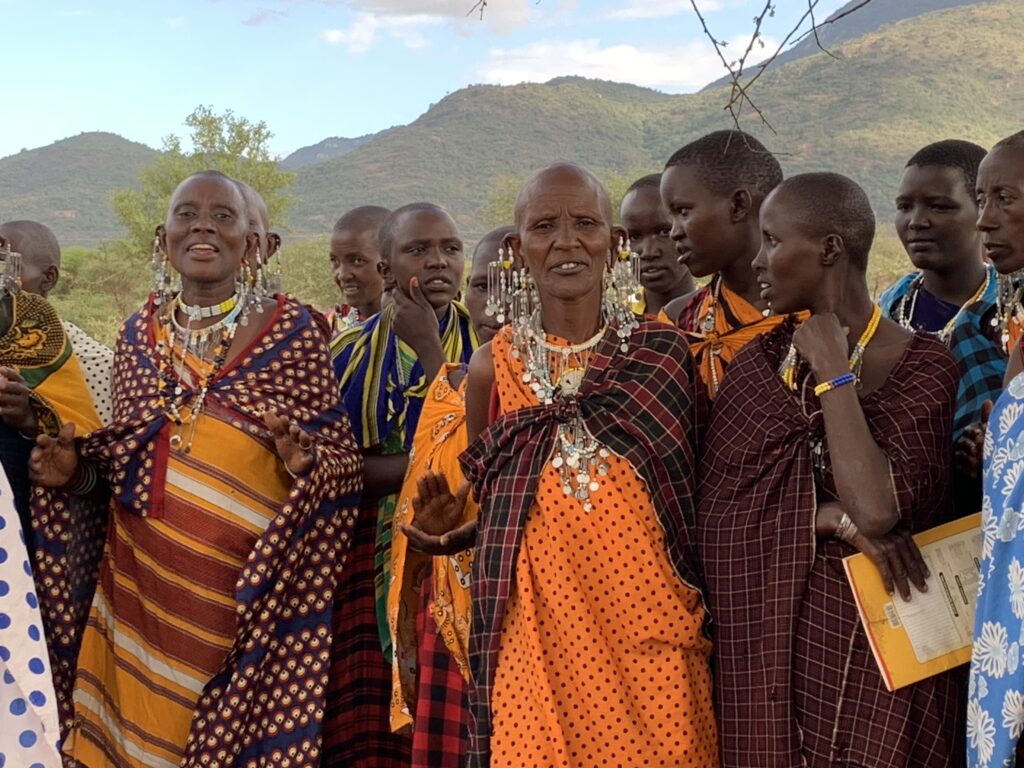
TEMBO’s micro-business program supports women in Longido District to develop income generating activities that lead to economic independence and enhanced quality of life for themselves and their families. The vast majority of women in the area follow a pastoralist way of life, lack basic education and human rights. TEMBO works to support this group of marginalized women by providing them with access to micro-finance loans or goats.
Micro-finance Loans
Currently, TEMBO provides microfinance loans to 66 women. Based on the work of Muhammad Yunus and the Grameen Bank, women work together in groups to support one another with business development and scheduled loan repayments. The women in the TEMBO microfinance loan program use the loan to operate businesses such as small restaurants and a pharmacy. Some women sell chickens and eggs or traditional fabrics, and others set up vegetable stands at the Saturday market.
Groups apply to participate in the program, and each borrower must have a ‘goal’. The ‘goal’ defines her objective and how she plans to achieve it; in other words, a simple business plan. After five years, TEMBO celebrates with the women as they graduate from the program. While many continue to operate their established small businesses, a few are able to secure larger loans from local financial institutions to expand their businesses.
Let's Visit Mama Tabita and Mama Ino
Meet the Women
Micro-Business Stories
Beatrice
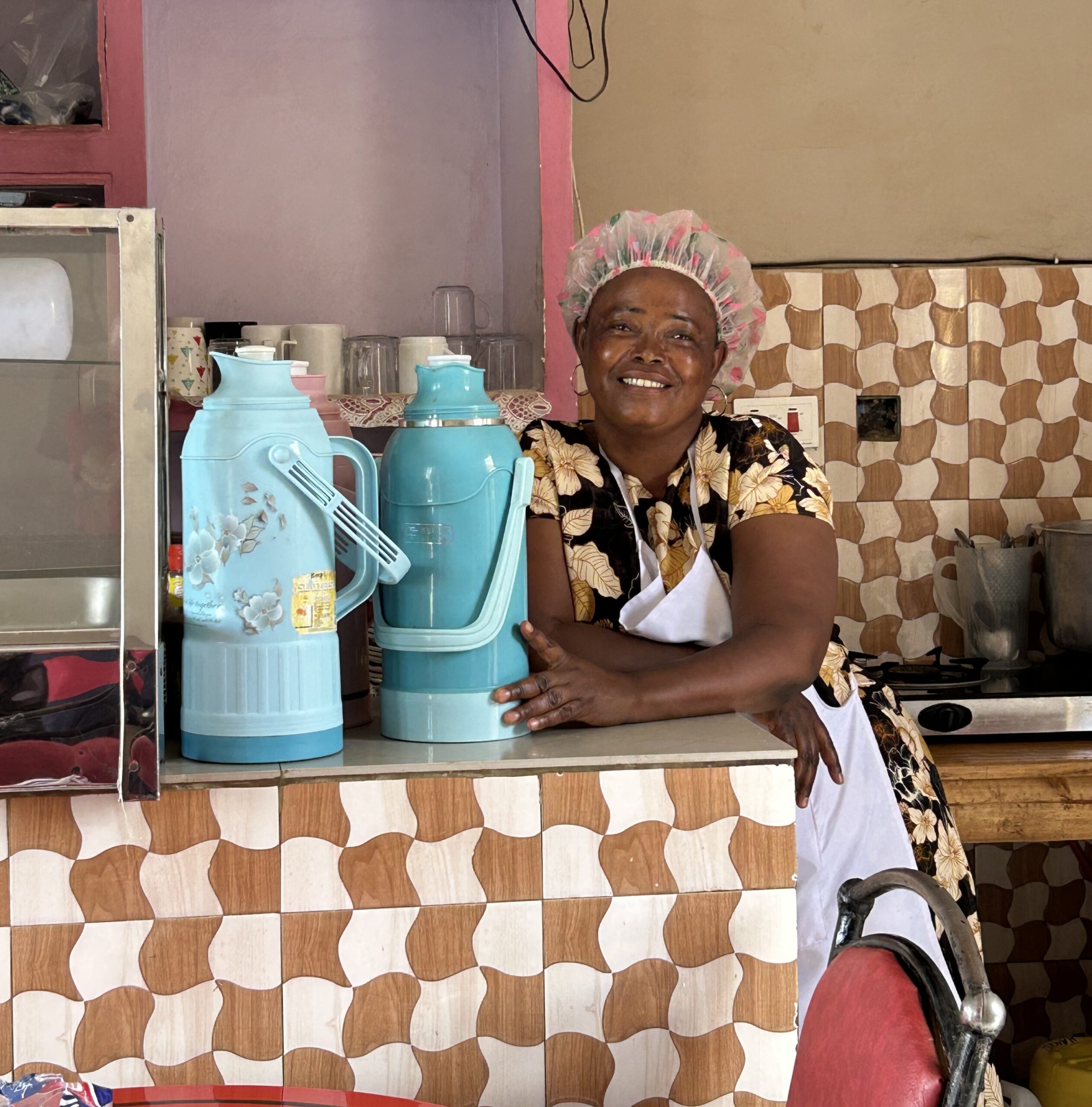
Beatrice rests her elbows on the counter in her small ‘duka’ (shop), chatting with the women who come to buy a bag of sugar or a pouch of seasoning. “This is one of the most popular items,” Beatrice notes. “It is small but I sell many in a day!”
Beatrice has just completed her first year in the micro-finance loan program. “The loan has helped me to buy more products for my store and I now have my own goat.”
On Saturday mornings, Beatrice packs up the supplies from her store and heads for the local market. She is quick to share some of her challenges where sometimes the car she hires breaks down or the competition. But Beatrice works hard and people appreciate her jovial spirit. She is proud her success and looks forward to year 2 in the loan program.
Micro-Business Stories
Elinaisha
On the main street in Longido, strategically placed near where the motorcyclists gather, Elinaisha owns a parts store to repair motorcycles. When you enter her shop, she greets you from behind a counter in a space filled with automotive parts. She points to tires and plugs and light bulbs and more, naming them off as she points. Clients bring a list of what is required and she orders the parts that she does not carry from Arusha.
Elinaisha worked from home at first, but since she opened her shop on the main street six years ago, her business has grown. She works alone although her children help out on school holidays. With the help of a TEMBO micro-finance loan, Elinaisha was able to expand her stock and pay for rent. If she could grow bigger, she would add service and parts for cars and trucks and for gutas (three-wheeled motorized vehicles).
Micro-Business Stories
Adelina
Adelina’s tailoring shop is a family affair. Working alongside her husband, Adelina, who learned to sew from friends, has been in business for five years. Inside the crowded shop, she works on two sewing machines, both hand operated. Her husband sews on the porch while family members use a charcoal-filled iron at a crowded table in the corner.
With the help of a loan from TEMBO, Adelina was able to buy material to sew school uniforms. She is proud that her business is growing with the increasing demand for school uniforms and pants and dresses for the community.
What does she charge to sew uniforms? Pants are 8000 Tsh (about $4.50) and skirts 6000Tsh (about $3.50).

Womens' Goat Project
Microfinance loans do not suit the situation of some of the very traditional women living in remote villages given their limited access to markets. In response to this gap, TEMBO has developed a Women’s Goat Program in three villages: Kimokouwa, Oldorko and Mayaka. The program is loosely modeled on the work of Heifer International in that TEMBO works with existing women’s groups in the village to identify 15 women, each of whom receives 2 female, drought tolerant goats. As the goats mature and give birth, the first two female goat babies are passed on to other women in the village and the program expands.
The growth and stability of the goat project is a direct result of the involvement and commitment of our local staff. They have built into the program two key success factors: a two-day seminar conducted prior to the distribution of the goats where everyone, including the men in the households, acknowledges that the women own the goats; and the ongoing support of TEMBO staff knowledgeable in animal husbandry.